How to manage risk when trading
Risk management is a central concept that governs your attitude to the assets you trade and how you go about it. Learn the types of risk to consider, along with common risk management techniques, effective risk management tools, and more.
What is risk management?
Risk management in trading refers to the methods used to protect capital and minimise losses, and is undertaken both before and during management of positions. Risk management strategies in CFD trading take many forms, from market risk and credit risk to liquidity risk and model risk, and all of them pose potential threats to your capital and market activities.
Whether using a stop-loss, considering your position size in line with volatility conditions, or weighing up how much risk you're willing to take on in general, having a keen understanding of the various factors that make up a comprehensive risk management plan is a must for serious traders.
What are risks in trading?
It's not only the risk of losing capital from a trade going against you that you should concern yourself with. From liquidity risk to operational risk, here's a comprehensive list of the risk types out there with margin trading, including how they differ and how to understand them.
Market risk: Market risk, also known as systematic risk, refers to the risk of losses resulting from adverse movements in asset prices. Fundamental factors such as changes in interest rates, economic indicators, geopolitical events, and investor sentiment can all drive market risk. It affects all securities and cannot be diversified away.
Liquidity risk: Liquidity risk is the risk of being unable to buy or sell an asset quickly at its current market price due to insufficient trading activity. Illiquid assets might include certain agricultural products, lesser-known metals, small-cap stocks, exotic currency pairs or thinly traded commodities. They often have wider bid-ask spreads and higher transaction costs, meaning trades may not be executed at the desired prices – this is known as slippage. In such circumstances, you may want to use guaranteed stops to ensure the position is closed at the exact price you want. However, if your guaranteed stop is activated, you'll pay a fee for this assurance.
Credit risk: Credit risk, also known as counterparty risk, arises when the other party to a financial transaction fails to fulfil their contractual obligations. Counterparties may default on their obligations, leading to financial losses for the trader. In CFD trading, this could include the broker, so choosing a regulated, trusted and well-capitalised provider can help reduce this risk.
Operational risk: Operational risk comes from internal processes, systems, or human error within trading operations. This includes errors in order execution, technological failures, cybersecurity breaches, and compliance issues. Operational risk can disrupt trading activities and result in financial losses, so it helps to make sure your broker has a reputation for reliable execution and solid operational processes.
Model risk: Model risk arises when trading decisions are based on flawed or inaccurate models, algorithms, or quantitative strategies. Traders rely on various models for risk assessment, forecasting and trading strategies, and errors in these models can lead to unexpected losses. Traders who rely on automated systems should regularly test and validate the assumptions behind them.
Regulatory risk: Regulatory risk refers to the risk of adverse changes in regulations or compliance requirements that affect trading activities. Regulatory changes may impact market structure, trading rules, leverage restrictions, margin requirements and reporting obligations, influencing trading strategies and the availability of derivative products.
Event risk: Event risk encompasses unexpected events or developments that can significantly impact financial markets, such as natural disasters, terrorist attacks, political upheavals, or corporate scandals. These events can cause market volatility and disrupt trading strategies.
Country risk: Country risk, also known as sovereign risk, is the risk associated with trading assets denominated in foreign currencies, located in foreign countries or issued by foreign governments. Factors such as political instability, economic downturns and currency fluctuations or devaluation can affect the value of these assets.
Concentration risk: Concentration risk arises from having a large portion of your trading capital invested in a single asset, sector, or market. A lack of diversification increases vulnerability to adverse price movements in specific assets or market segments. That's why it's advisable to spread your trading across diverse instruments with different risk profiles, to minimise the impact of extreme price fluctuations in single assets.
Psychological risk: Psychological risk refers to the emotional and cognitive biases that can influence trading decisions. Fear, greed, overconfidence, loss aversion and herd behaviour can cause traders to deviate from their trading plan, resulting in poor decision-making and increased risk exposure. It's worth factoring psychological risk into your trading plan and making sure you're trading in the right frame of mind when it matters most.
Why is risk management important in trading?
Risk management is important in trading because applying it effectively can help preserve funds, protect your trading capital and prolong your trading career. Trading is risky and markets can be volatile, meaning conditions can vary wildly across assets and market conditions. Managing risk well means minimising potential losses, maintaining consistency in your trading performance, helping you in your trading journey, and giving you the best chance to achieve your financial goals.
How can I manage my risk when trading?
You can manage your risk when trading in various ways depending on the risk presented. Perhaps the most common way is to apply carefully thought-out stop-losses to mitigate market risk, but other risk management strategies include hedging, diversification, backtesting, and maintaining a consistent emotional approach to decision-making to minimise impulsive trades. You can practise your trading risk-free with us by opening a demo account.
Here are some ideas for risk management across the range of risk types.
| Type of risk | Potential risk management solution |
|---|---|
| Market risk | Apply a stop-loss to limit the downside of a trade. |
| Liquidity risk | Diversify your portfolio across risk-on and risk-off assets. |
| Credit risk, operational risk | Trade with reputable brokers with strong credentials across compliance and trading operations. |
| Model risk | Validate and backtest trading models rigorously before deployment, and regularly reassess and adjust them to account for changing market conditions. |
| Regulatory risk | Stay informed about regulatory changes in the jurisdictions where you operate and ensure compliance with all relevant regulations. |
| Event risk | Use hedging strategies to protect against unexpected events that could impact markets. |
| Country risk | Diversify your investments across different countries to reduce exposure to any single country's economic or political risks. |
| Concentration risk | Avoid overexposure to any single asset or sector by diversifying your portfolio. |
| Psychological risk | Practise disciplined trading strategies, maintain emotional control, and consider using techniques like meditation or journalling to manage stress and emotions during trading. Additionally, setting predefined trading rules and sticking to them can help mitigate impulsive decision-making. |
What are risk management strategies?
Risk management strategies refer to plans to manage all types of risk. Your strategy will need to identify any applicable risk to your trading activity, such as those outlined in the section above, evaluate how likely each one is in different scenarios through a comprehensive assessment, and set out how you'll respond if a risk materialises.
With that written down, you'll be in a position to better avoid and reduce risks when they present themselves. It's important to monitor your risk management strategy and adjust as needed based on market conditions, your own risk tolerance, and other factors.
Find out more in our technical analysis guide and our trading strategy guides, covering trend and timeframe analysis, fundamental analysis, trading versus investing, and more.
What are risk management tools?
Risk management tools are the technical instruments traders use to help them manage risk – such as stop-loss orders, which are crucial in derivatives trading to protect against significant losses. Here are some common risk management tools used in CFD trading.
Standard stop-loss orders
Stop-losses automatically close a trade when the market moves against you by a specified amount. They help to limit potential losses. Stop losses can be fixed in place, or trailing (see below).
Take-profit orders
These close a trade when the market moves in your favour by a specified amount, securing profits before the market can reverse.
Guaranteed stop-loss orders (GSLOs)
This is a more secure version of the stop-loss order, guaranteeing to close the trade at the specified price, regardless of market volatility or gaps. GSLOs are subject to a fee if activated.
Trailing stops
Trailing stops adjust the stop-loss level as the market price moves in your favour (i.e. up for a long trade and down for a short trade), locking in profits while still protecting against adverse price movements.
Leverage and margin control
Managing the amount of leverage used in trading can ensure it's within a comfortable risk level. This can prevent margin calls and the forced closure of positions. You can adjust your leverage on the platform for different asset classes by clicking the account menu and selecting your preferred ratio.
Hedging
Hedging refers to opening new positions to offset potential losses from existing positions. This can help manage risk exposure in volatile markets.
Position sizing
This refers to determining the appropriate amount of capital to allocate to each trade to ensure that no single position can significantly impact the overall portfolio.
Diversification
Diversification entails spreading investments across various assets or markets to reduce exposure to any single asset or market risk.
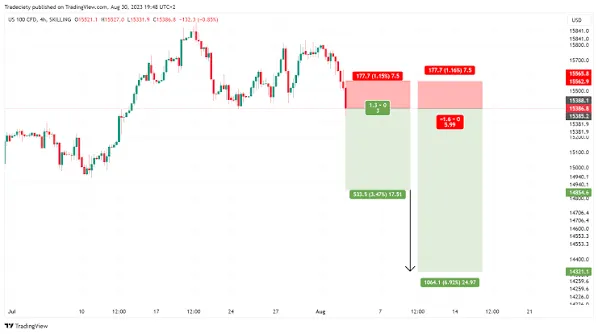
Risk-reward ratio analysis
Assessing the potential risk versus the expected reward for each trade to ensure it meets predetermined risk management criteria.
Regular monitoring and analysis
Continuously monitoring market conditions and reviewing trading strategies, positions and performance to adjust risk management techniques as necessary.
Market alerts and notifications
Setting up alerts to notify traders of significant market movements or conditions that could affect their positions, allowing them to take timely action.
Trading plan and discipline
Having a comprehensive trading plan that includes risk management strategies and adhering to it strictly to avoid emotional decision-making.
Using these tools effectively helps CFD traders manage their risk exposure and improve their chances of long-term success in the markets.